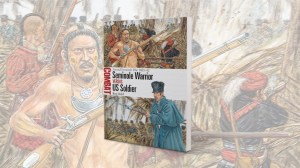
Seminoles Taught American Soldiers a Thing or Two About Guerrilla Warfare
HistoryNet historynet.com
Listen to this summary
The word “Seminole” is derived from the Muscogean word simanó-li, or “runaway,” reflecting a common heritage, as Upper Creeks from Alabama, Lower Creeks from Georgia, other affiliated tribes and escaped African slaves all sought sanctuary in Spanish Florida. There they mixed with one another, adapted to their surroundings, traded with Britain, Spain and the United States and came to be collectively recognized as one of the Five Civilized Tribes (along with the Cherokee, Chickasaw, Choctaw and Creek/Muscogee) of the American Southeast. Not civilized enough for some, apparently, for when the United States acquired Florida in 1821, it began herding the Seminoles, through a succession…
In Seminole Warrior versus U.S. Soldier: Second Seminole War, 1835–42 (No. 61 in Osprey’s Combat series) military historian Ron Field compares the tactics, arms, equipment and fighting techniques used by both sides. In addition to what whites termed the “Dade massacre,” re-examined here through a more impartial lens, Field relates two other major engagements—at Lake Okeechobee, on Christmas Day 1837, and the second of back-to-back clashes at the Loxahatchee River, on Jan. 24, 1838.
More ways to use this
Open on another device

Scan to open this page. Your saved notes and account access are not included.
 Java4Shell (CVE-2026-114938): Frequently asked questions about OpenJDK remote code execution vulnerability